Our Sustainable Estate Vineyard in Oregon’s Eola-Amity Hills
Our Vineyards
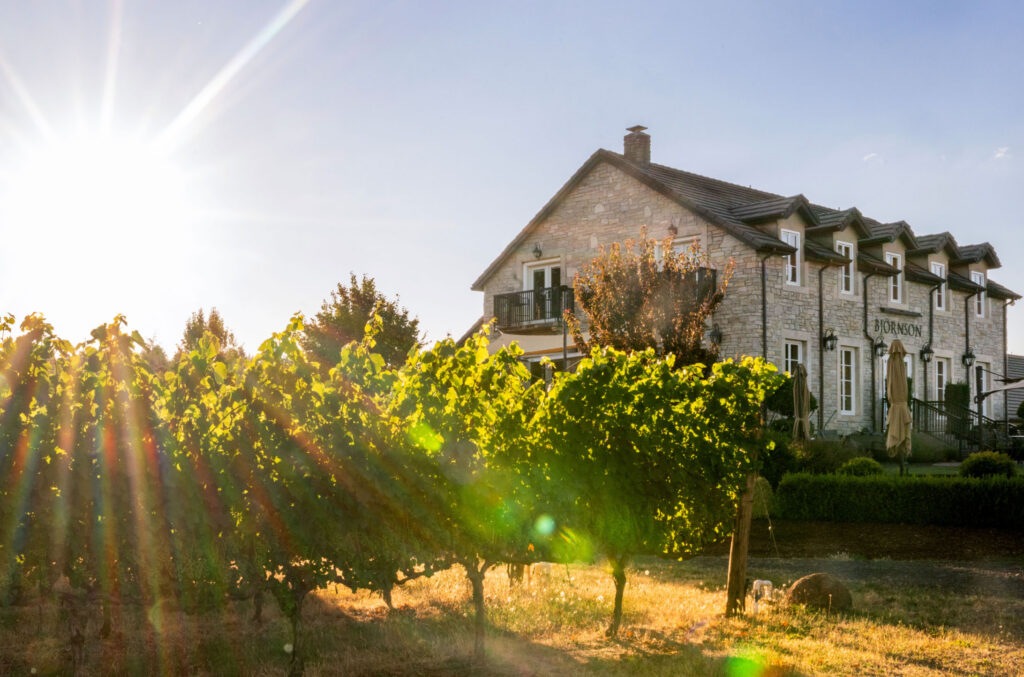
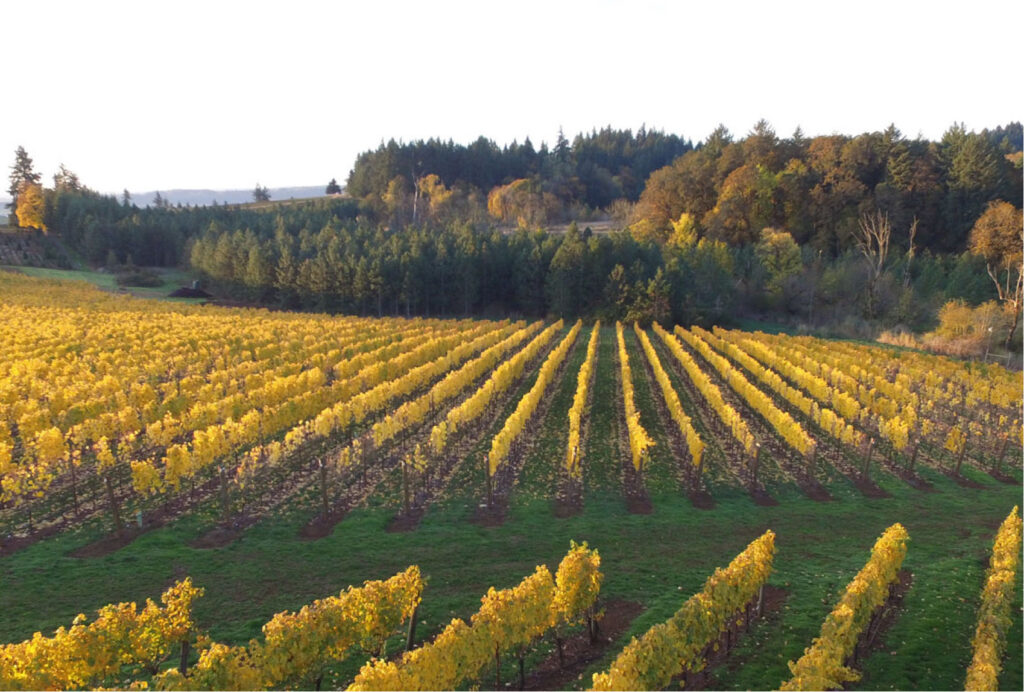
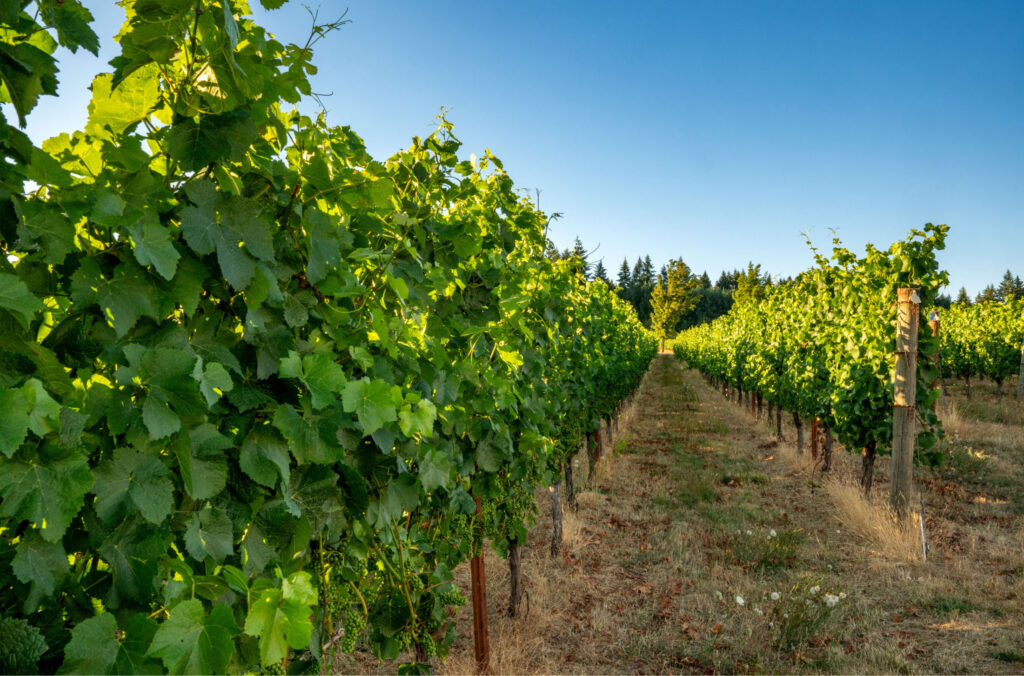
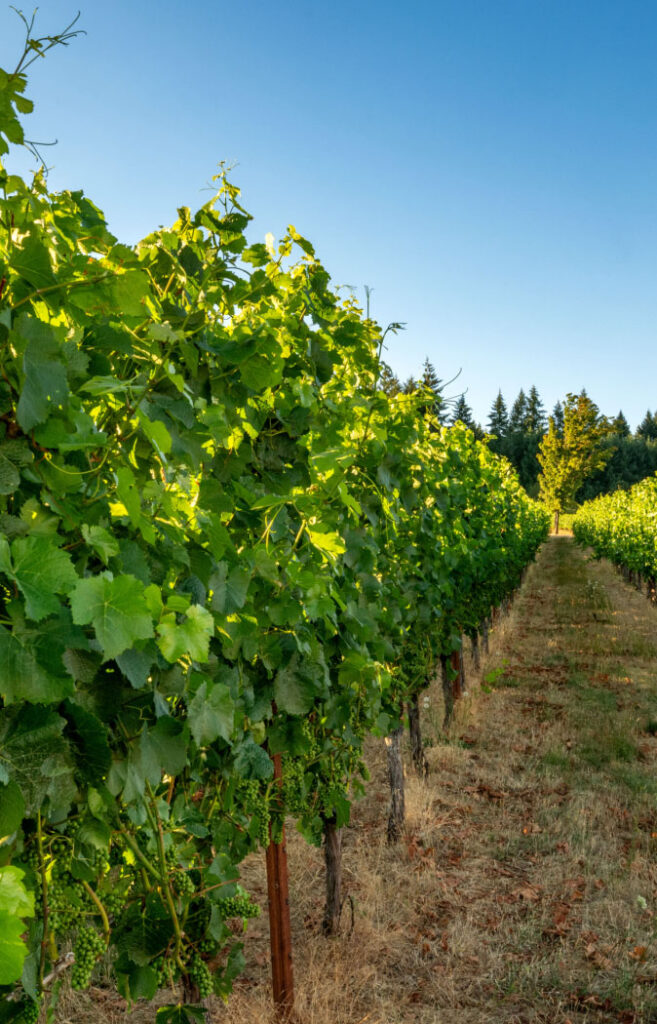
Björnson Vineyard spans two estate vineyards in two distinct Willamette Valley AVAs. Our original vineyard in the Eola-Amity Hills is joined by Pamar Vineyard in the Van Duzer Corridor, giving us room to explore what can thrive in Oregon wine country, all with the same commitment to thoughtful, sustainable farming.
Eola-Amity Hills AVA
Estate Vineyard
Each of our vineyard blocks are named after our children, each with its own story.
Van Duzer Corridor AVA
Pamar Vineyard
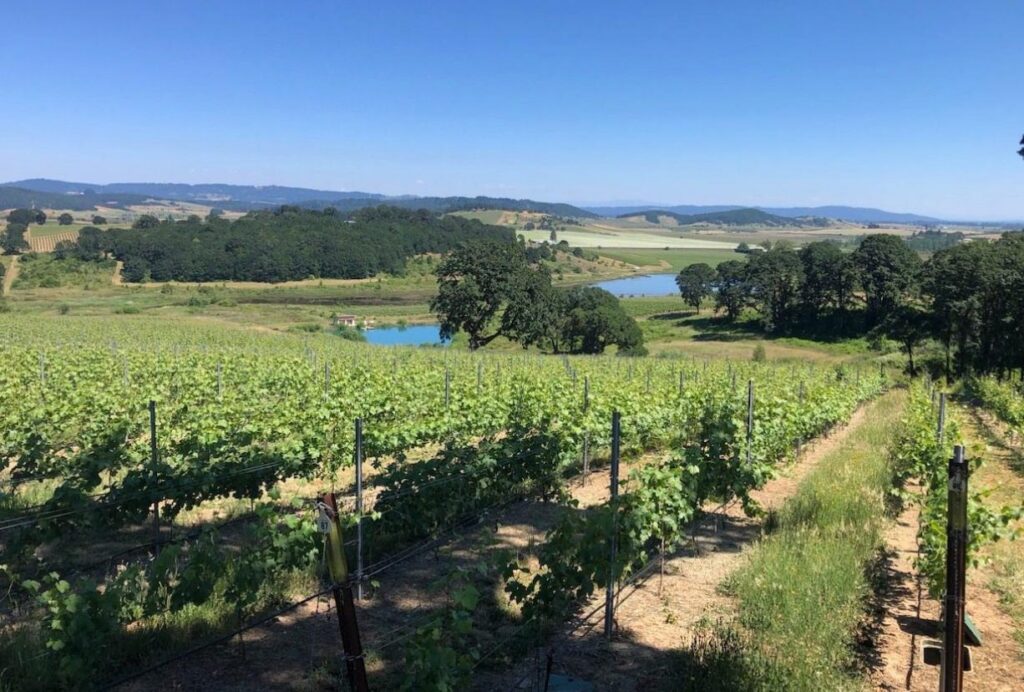
Pamar integrates solar energy, permanent cover crops, and oak savanna preservation to honor the land while producing distinctive wines.
Surrounding our Estate
BjörnsonVineyard
Exceptional wine begins in the vineyard.
Our estate vineyard reflects that belief and is certified Salmon-Safe and sustainable by L.I.V.E. (Low Input Viticulture and Enology).
Sustainability for the land and the wildlife
Although 28 acres are planted to vines, more than 75 acres of our estate remain forests, creeks, and riparian areas.
We participated in the USDA’s Conservation Stewardship Program beginning in 2010 and continue those practices today.
the Estate Vineyard Blocks
Our vineyard blocks are named after our children, each with its own story.
Scroll to discover them all!
Estate Block
Kristjan’s Block
Planted in 2006 with Pommard and Dijon-777 Pinot Noir, Kristjan’s seven-acre block sits on Jory and Nekia soils at 465–530′ elevation.
Kaitlyn was supposed to get the honor, but when she refused to help pick rocks, Kristjan stepped in with enthusiasm and earned the honor of his name on the first block.
Estate Block
Claire’s Block
Planted in 2009, Claire’s Block includes Pinot Noir, Auxerrois, and Chardonnay across nearly five acres.
Though she preferred folding laundry to picking rocks, Claire kept the home fires burning during planting season.
Grapes
Pinot Noir, Auxerrois, and Chardonnay
Soil
Planted
2009
Elevation
480–560′
Estate Block
Hunter’s Block
Also planted in 2009, Hunter’s four-acre block of Pinot Noir thrives in rocky Nekia soils between 480–560′.
A contractor once told Mark nothing would grow here, but after 400 tons of rock were cleared, the Wadenswil vines proved him wrong.
Eight-year-old Hunter even hauled rocks himself.
Grapes
Pinot Noir
Planted
2009
Estate Block
Kaitlyn’s Block
The largest, planted in 2012, Kaitlyn’s 10½-acre block grows Pinot Noir, with an additional two acres of Gamay Noir.
Initially uninterested, Kaitlyn later worked in the wine industry and surprised her parents with, “You guys have really good wine!” She also proved herself in wine sales, boosting numbers whenever she worked an event.
Powered by Renewable Energy
RenewableEnergy
Having Oregon sustainable vineyards goes beyond the vineyard. The winery building was designed with energy efficiency in mind, using insulated concrete forms, ductless heat pumps, radiant heating, and LED lighting.
In 2015, we installed a hybrid solar photovoltaic and hot water system with USDA REAP support. It now supplies over 70% of our winery’s energy needs. In 2009, we became the first Oregon vineyard to install a wind turbine, later replaced with additional solar panels.
Today, our combined solar arrays generate 20kW of electricity.
Van Duzer Corridor
PamarVineyard
In addition, our second site, Pamar Vineyard in the Van Duzer Corridor AVA, is farmed sustainably and regeneratively.
With solar panels, permanent cover crops, and oak savanna preservation, it reflects our commitment to both wine and land.
The Van Duzer Corridor: A Cool-Climate Oregon AVA
The Van Duzer Corridor is known for its strong marine winds and diverse soils. These natural forces shape grapes with thick skins, high natural acidity, and concentrated flavors.
Of Pamar’s 85 acres, 32 are currently planted to vines, with plans for about 50 acres in total — each chosen to thrive in this cool-climate terroir.
A new chapter for Bjornson
Pamar Vineyard Blocks
The soils at Pamar are a mix with predominately uplifted marine sediment, volcanic areas, and, at lower elevations, Missoula flood traces. Elevations range from just under 300 feet to 527 feet. Slopes are east, southeast, south, and southwest. Like the Eola-Amity Hills, the Van Duzer Corridor AVA is subject to strong winds. These winds cool the grapes in the evening and increase transpiration. This retains acidity and thickens the grape skins resulting in more flavor.
Scroll to learn about each block!
Estate Block
Marlys' Block
Marlys’ Block was named for Pattie’s mother and planted to Chardonnay in 2019.
Grapes
Chardonnay
Planted
2019
Soil
Coming Soon…
Elevation
380-425′
Estate Block
Kay’s Block
Kay’s Block was named for Mark’s oldest brother and planted with Chardonnay, Trousseau, Mondeuse Noire, Gouais Blanc, Pinot Meunier, Gamay Noir, and Aligoté in 2019.
Grapes
Chardonnay, Trousseau, Mondeuse Noire, Gouais Blanc, Pinot Meunier, Gamay Noir, and Aligoté
Soil
Coming Soon…
Planted
2019
Elevation
270-370′
Estate Block
Tom's Block
Tom’s Block was named for Pattie’s father and planted with Pinot Blanc, Sauvignon Blanc, Mondeuse Noire, and Chenin Blanc in 2019 and 2020.
Grapes
Pinot Blanc, Sauvignon Blanc, Mondeuse Noire, and Chenin Blanc
Soil
Coming Soon…
Planted
2019 & 2020
Elevation
265-350′
Estate Block
Sido's Block
Grapes
Pinot Noir & Cabernet Franc
Soil
Coming Soon…
Planted
2021 & 2022
Elevation
315-460′
Estate Block
Gudi's Block
Grapes
Pinot Noir
Planted
2023
Soil
Coming Soon…
Elevation
440-545′
Estate Block
Hunton Block
Grapes
Pinot Noir & Pinot Meunier
Soil
Coming Soon…
Planted
2023
Elevation
430-540′
Estate Block
Boyd's Block
Grapes
Pinot Meunier & Melon de Bourgogne
Soil
Coming Soon…
Planted
2023
Elevation
440-520′
A Living Link to History
Gouais Blanc
Among our most exciting plantings is Gouais Blanc, one of the oldest and most influential grapes in the world. Pamar has the first, and at this point, the only, commercial planting of Gouais Blanc in the Western Hemisphere.
Once dismissed as a peasant’s grape in medieval Europe, Gouais Blanc has since been revealed through DNA testing to be the parent of 81 varieties – including Chardonnay, Gamay, and Riesling. Its natural partnership with Pinot Noir produced 21 offspring, among them Aligoté, Auxerrois, and Melon de Bourgogne.
The wines it produces are citrus-driven, bright, and brimming with refreshing acidity – a natural partner for oysters, shellfish, and charcuterie. To taste Gouais Blanc at Björnson is to sip a rare piece of history.